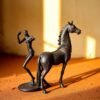
Bastar Iron Art
Discover the raw beauty and timeless craftsmanship of Bastar Iron Art, a traditional wrought-iron craft from the Bastar region of Chhattisgarh, central India. Once created by local ironsmith communities to produce farming and hunting tools, this practical tradition gradually evolved into an expressive art form featuring animals, birds, lamps, figures, trees, and scenes inspired by tribal life. Bastar Iron Craft has been recognized as a Geographical Indication (GI) craft since 2008.
Traditionally known as Lohshilp, the craft is distinguished by its remarkably direct and tactile process. Instead of relying on casting or industrial moulds, artisans heat iron—often recycled scrap sourced from households and markets—and repeatedly hammer it until the desired shape emerges. Unwanted sections are cut away, edges are carefully finished, and the completed piece may be coated to enhance its surface and durability.
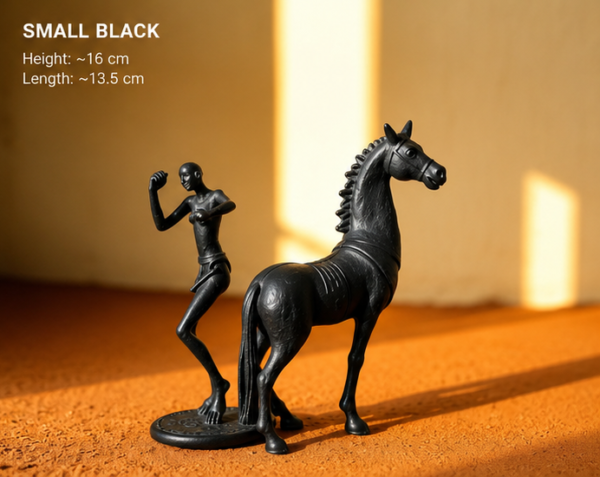
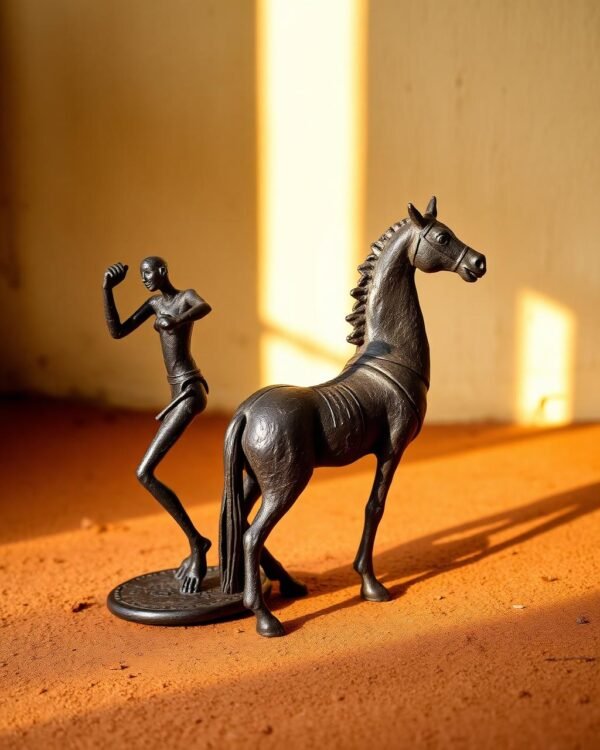
The result is a style that celebrates the natural character of iron. Its simple silhouettes, slender lines, textured surfaces, and handcrafted imperfections give every artwork a distinctive presence. Common motifs include birds and animals, plants, lamps, human figures, religious imagery, and scenes representing the everyday life and cultural traditions of Bastar.
This tradition is particularly connected to generations of Lohar, or ironsmith, communities, whose knowledge and techniques have been passed from one generation to the next. Tiju Ram is among the artisans associated with Bastar’s wrought-iron tradition, with documentation showing his workshop and handmade iron pieces created using these traditional methods.
What Makes Bastar Iron Art Special
- Authentic Bastar Heritage — A traditional craft deeply connected to the cultural life of Chhattisgarh.
- Hand-Forged Craftsmanship — Iron is heated, hammered, cut, and shaped rather than mass-produced through industrial moulding.
- Recycled Materials — Traditional Bastar ironwork commonly makes use of recycled iron scrap, giving discarded metal a new artistic purpose.
- Inspired by Nature & Culture — Animal, bird, plant, human, and ritual motifs reflect the environment and traditions of the Bastar region.
- Generational Knowledge — The skills of the ironsmith communities have been preserved and passed down through generations.
- Every Piece Is Unique — Small variations in shape, texture, and finish are part of the charm of handmade wrought iron.
- A Statement of Craft & Heritage — More than decorative metalwork, each piece represents the ingenuity, history, and living craft traditions of Bastar.
A Bastar Iron Art piece brings an authentic sense of strength, simplicity, and cultural character into a contemporary collection. Its dark metal surface and sculptural forms make it equally suited to display as a striking decorative accent or to be appreciated as a piece of India’s living craft heritage.