

Kalighat Painting
Discover the bold and expressive beauty of Kalighat painting, one of Bengal’s most distinctive folk-art traditions. The style developed around the Kalighat Kali Temple in 19th-century Kolkata, where traditional painters known as patuas created affordable paintings on paper for pilgrims and visitors. What began primarily as devotional imagery gradually expanded into a lively visual record of Bengali society.
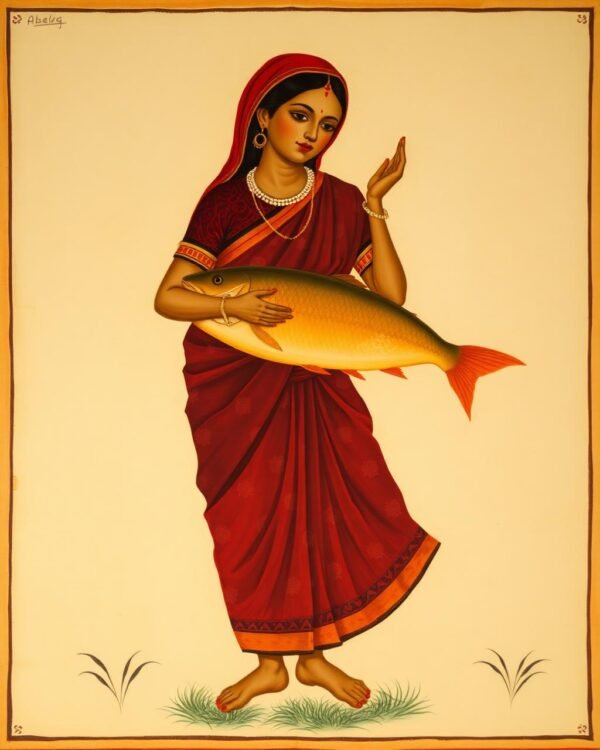
Kalighat paintings are immediately recognizable for their fluid, sweeping outlines, simplified forms, vibrant colors, and uncluttered backgrounds. Rather than filling every part of the composition with intricate decoration, artists often allowed areas of empty space to emphasize the central figure or story. This direct and confident approach gives the paintings their distinctive sense of movement and character.
Early Kalighat works frequently portrayed Hindu gods and goddesses, mythological stories, and popular religious subjects. Over time, however, artists began depicting scenes from contemporary Bengali life, including people, animals, relationships, occupations, and social behavior. Some works even used humor and satire to comment on the changing society of colonial-era Kolkata.
What Makes Kalighat Painting Special
- Born in Kolkata — Developed in the lively surroundings of the Kalighat temple during the 19th century.
- Bold Brushwork — Characterized by confident, sweeping lines that define figures with remarkable simplicity.
- Vivid Color — Strong areas of color give the artwork an immediate visual impact.
- Minimal Backgrounds — Uncluttered compositions place attention on the main subject and narrative.
- Religious & Mythological Themes — Traditional subjects include Kali, Durga, Shiva, Krishna, and other figures from Hindu mythology.
- Everyday Storytelling — Artists also captured scenes from ordinary Bengali life and the rapidly changing urban culture of Kolkata.
- Social Commentary — Some Kalighat works used humor and satire to reflect social attitudes and contemporary events.
- Influential Style — Its bold simplicity influenced later developments in modern Indian painting.
The enduring appeal of Kalighat lies in its ability to communicate a story with remarkable economy and expressive power. A few sweeping lines can define a figure, while carefully chosen colors and gestures convey personality, movement, and emotion.
Today, Kalighat painting is valued not only as a beautiful form of Indian folk art but also as an important cultural record of Bengal’s religious traditions, urban life, and social transformation. Each work carries the energy of a tradition that successfully combined devotion, observation, humor, and artistic simplicity.
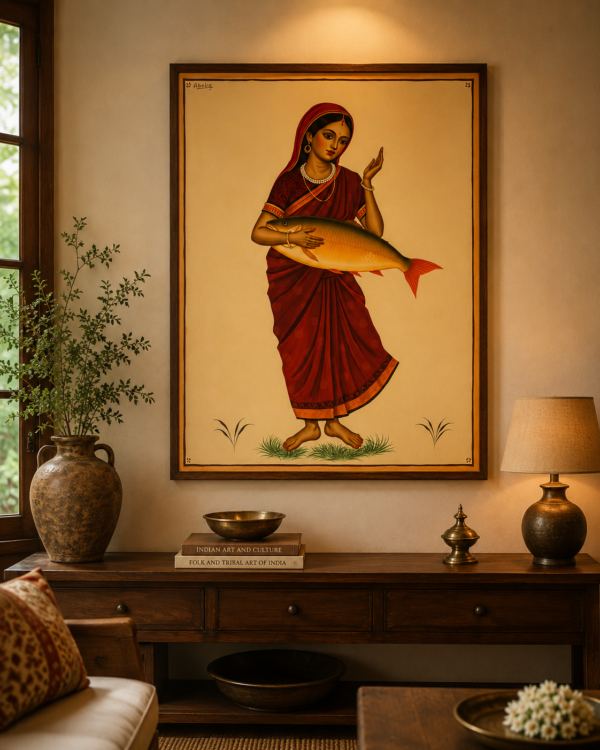
A Kalighat painting brings a distinctive character to a contemporary collection—bold, expressive, culturally rich, and unmistakably Bengali.